First-Time Home Buyer Programs by State: How to Find Yours (Official Sources)
Every state runs its own first-time home buyer programs, mostly through its housing finance agency. Start there, then check your city and county housing office and HUD's state pages. Help comes in five main forms: special first mortgages, down payment help, mortgage credit certificates, homebuyer classes and federal loan programs. Rules, income limits and funds change often, so trust only official sources.
Who counts as a first-time home buyer?
Often it is wider than you think. Many programs count you as first-time if you have not owned a home in the last three years. So a past owner who has rented for a while may qualify. Each program sets its own rule, so read its definition before you rule yourself out.
What kinds of first-time buyer help are there?
1. State first mortgage programs
Many state housing finance agencies offer their own first mortgage through approved lenders. These often pair with down payment help and come with income and price limits. You apply through a lender that works with the program, not with the agency directly.
2. Down payment and closing cost help
Grants, forgivable loans and deferred loans that cover part of your cash to close. We explain each type in how down payment assistance works and on our down payment assistance page.
3. Mortgage credit certificates (MCCs)
Some state and local agencies issue a mortgage credit certificate. It can turn part of the mortgage interest you pay each year into a federal tax credit. The IRS says you use Form 8396 to figure the credit if you were issued a qualified MCC by a state or local government agency. Selling within a set number of years can trigger a recapture tax, so ask your CPA before you sign up.
4. Homebuyer education
Many programs require a short homebuyer class, often online. Even when it is not required, it is worth it. A HUD-approved housing counselor can also review your budget and credit, often for free.
5. Federal loan programs
These are open to first-time and repeat buyers in every state:
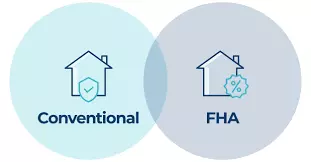
- FHA loans, insured by HUD, with lower credit score rules. See FHA loan limits and rules for 2026.
- VA loans for eligible veterans, service members and some surviving spouses.
- USDA loans for homes in eligible rural areas, with income limits.
Compare them in FHA vs. conventional and all loan programs.
How do you find the programs in your state?
- Go to your state housing finance agency. Search your state's name plus "housing finance agency" and pick the official government site. It lists the state's programs, income limits and approved lenders.
- Check HUD's state pages. HUD keeps a page for each state that points you to homebuying help, including HUD-approved housing counselors.
- Check your city and county. Many cities and counties run their own help, sometimes on top of the state's.
- Ask a lender that works with the programs. Not every lender offers every program. Ask which ones they are approved for.
- Talk to a housing counselor. Use the CFPB's housing counselor finder for a HUD-approved one near you.
Be careful with sites that charge a fee to "find" programs for you or promise a grant. The official lists are free.
Can you use retirement money for your first home?
Sometimes, with limits. The IRS lists an exception to the extra 10% tax on early IRA withdrawals for up to $10,000 used for a qualified first-time home purchase. Regular income tax can still apply, and 401(k) rules are different. Ask your CPA before you take money out.
What should you ask about any program?
- What are the income and price limits for my county?
- Is the help a grant or a loan? If a loan, when do I pay it back?
- Does it change my interest rate or loan costs? Ask for the total cost with and without it.
- Do I have to live in the home a set number of years?
- Is there a homebuyer class, and when must I finish it?
- How long does approval take, and can funds run out?
Programs add steps and time. Tell your agent early so your offer gives you enough days to close.
What else changes by state?
Programs are only one piece. Closing costs, transfer taxes, inspections and homestead tax breaks also change by state. Our state guides cover them, for example Texas, Florida, Georgia and Arizona. Then follow the first-time homebuyer checklist.
What should you do first?
- Check your budget in the affordability calculator.
- Look up your state housing finance agency's programs.
- Get pre-approved with a licensed loan officer who works with those programs.
- Find a local agent who has closed program loans before.
Quick answers
Where do I find first-time home buyer programs in my state?
Start with your state housing finance agency's official website. Then check your city and county housing offices, and HUD's page for your state.
Do I have to be a first-time buyer to get help?
Not always. Many programs count you as first-time if you have not owned a home in three years, and some help is open to repeat buyers too.
What is a mortgage credit certificate?
A certificate from a state or local agency that can turn part of your mortgage interest into a federal tax credit, figured on IRS Form 8396.
Can I use my IRA to buy my first home?
The IRS lets you skip the extra 10% early withdrawal tax on up to $10,000 for a qualified first-time home purchase. Income tax may still apply, so ask your CPA.
Do first-time buyer programs cost money to apply?
Searching official program lists is free. You still pay normal loan and closing costs, so ask the lender for every cost in writing.
Down payment help · Get pre-approved · First-time buyer checklist
Sources and further reading
Updated November 14, 2026. We check these sources each time we update this guide. See our editorial policy.
Categories
Recent Posts